Future Minds for Lyceum
Levels A2, B1, B1+, B2


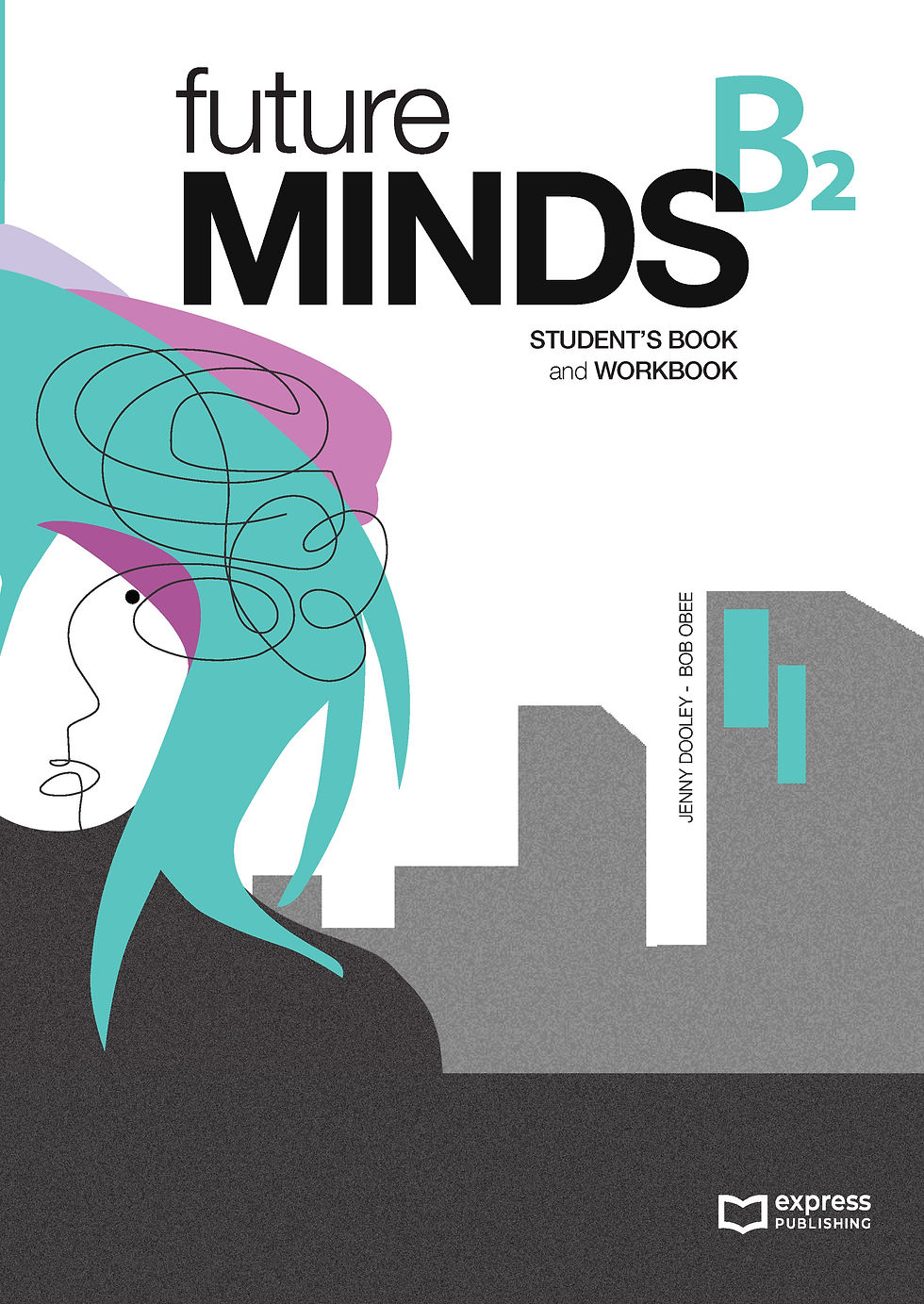
Future Minds A2 (Evening Classes), B1, B1+, B2 systematically integrates listening, speaking, reading and writing across the Lyceum pathway. Each unit is organised around a central theme and brings together receptive, productive and interactive work. Students read and listen to a variety of texts, respond through comprehension and critical-thinking tasks, exchange ideas with classmates, and produce spoken and written outcomes.
This integrated approach reflects real-life language use. Students may read or listen to input on a contemporary issue, analyse meaning and purpose, discuss it with others, mediate information, and then produce a written or spoken response. The series also supports the CEFR modes of reception, production, interaction and mediation.
Interaction is promoted through pair work, group work, role play, debates, presentations and collaborative tasks. This helps Lyceum learners move beyond controlled practice towards confident, purposeful communication for study, work, travel, digital communication and intercultural contact.
Future Minds also supports flipped learning through the integration of video-based input, explicitly indicated at relevant points throughout the Student’s Book for use both in class and at home. This approach enables learners to engage with content at their own pace and time, maximising interactive use of lesson time. Its flexibility makes it suitable for diverse teaching contexts, including large and mixed-ability classes. In addition, the combination of print and digital resources facilitates blended and flipped learning, promoting learner autonomy and the development of real-life communication skills.
Future Minds A2, B1, B1+, B2 provides carefully graded progression across the Lyceum pathway. Language input, grammar, vocabulary, skills tasks and productive outcomes move from accessible stages to more demanding communicative and cognitive work. Students consolidate core language before applying it in extended speaking, writing, problem-solving, mediation and project-based tasks.
The graded structure is suitable for mixed-ability and multilevel classes. It allows teachers to support students who need consolidation while also challenging stronger learners through more demanding texts, extended production, argumentation, mediation, public speaking and real-world tasks.
The Workbook reinforces this progression through additional practice, review and extension. This supports differentiated teaching while maintaining a clear common pathway towards the linguistic and communicative expectations of Lyceum students.
There is also an Extensive Reading section (Levels B1,B1+,B2) which allows students to build literacy skills, increases engagement, develops empathy and builds confidence while encouraging language development.
Future Minds A2, B1, B1+, B2 supports classroom technology and independent learning through the Student’s Book with Digi App, downloadable audio, grammar and writing videos, digital resources, tests, Teacher’s Resource Material and digital interactive whiteboard material.
The DigiIWB contains all the material in the Student’s Book & Workbook as well as the Teacher’s Book and aims to facilitate lessons in the classroom. It also contains videos tightly linked to the texts in the series, vocabulary presentation videos, grammar presentation videos and writing presentation videos. The DigiBooks app contains all the material in the Student’s Book and Workbook, audios as well as all the videos that exist in the DIWB. The Digibooks app helps students monitor their progress and improve their scores, which are recorded and stored so that they can be accessed at any time.
These digital resources allow teachers to present and practise material effectively in class and give students opportunities to study independently outside school.
Technology is also part of the course content. Students engage with topics such as artificial intelligence, video conferencing, digital communication, online life, social media, cyber-related issues, technology, innovation and media. This makes the series relevant to older teenagers and helps them use English in contexts that reflect modern academic, social and professional communication.
The digital support encourages learner autonomy. Students can revisit language, listen again, review vocabulary and grammar, practise writing and consolidate learning at their own pace.
The series is organised into clear, manageable units with a consistent structure. Vocabulary, grammar, reading, listening, speaking, writing, culture, values, life skills, mediation and public-speaking sections are presented in clear, teachable stages. This makes the material easy to follow for students and practical for teachers.
Grammar and vocabulary are introduced through meaningful contexts and videos and practised through controlled, guided and freer activities. Students are supported in moving from language awareness to communicative use. The unit structure also allows teachers to plan lessons effectively, select material according to available time, and provide reinforcement or extension where needed.
This organisation is realistic for public Lyceum classrooms and supports systematic progression across the school year.
Future Minds A2, B1, B1+, B2 explicitly develops the sub-skills required for successful language learning. Reading tasks develop skimming, scanning, identifying detail, understanding purpose, recognising text organisation, following argumentation, distinguishing viewpoints and inferring meaning from context. Listening tasks include listening for gist, listening for specific information, recognising attitude, following spoken interaction, understanding detail and note-taking.
Speaking tasks develop turn-taking, expressing opinions, giving reasons, agreeing and disagreeing, clarifying, justifying, conceding arguments, problem-solving, presenting information and sustaining interaction. Public-speaking activities help students organise ideas, address an audience and communicate with confidence.
Writing sections provide models, writing tips and guided stages that help students understand genre, audience, register, organisation and purpose. Students encounter emails, essays, articles, reports, reviews, proposals, letters, cover letters and narrative accounts.
Future Minds A2, B1, B1+, B2 offers diverse, universal and contemporary themes that reflect the interests, concerns and future needs of Lyceum students. Topics include identity, education, work, responsible travel, entrepreneurship, volunteering, urban life, environmental responsibility, artificial intelligence, social media, money, health, well-being, culture, creativity and global citizenship.
These themes create meaningful contexts for communication and critical thinking. Students discuss issues, evaluate information, express views, solve problems and connect learning with real-life situations. The series also prepares students for future study, work and social participation through tasks related to CV writing, job interviews, public speaking, negotiation, digital communication, responsible travel, social media, environmental awareness and community engagement.
Review and self-assessment opportunities help students reflect on progress and apply English to meaningful outcomes. The series also offers a wide range of activities suitable for project work, to be carried out individually or collaboratively, both within and beyond the classroom.
Culture is embedded throughout Future Minds A2, B1, B1+, B2. Students encounter cultural references, traditions, institutions, social practices and aspects of everyday life in English-speaking contexts. These cultural elements help learners develop intercultural awareness and compare perspectives respectfully.
Cultural content is linked to unit themes rather than treated as a separate component. Students explore topics such as rights, traditions, public institutions, social behaviour, tourism, sport, media, music, work, community life and social responsibility. These references create opportunities for comparison, reflection and discussion.
The series also supports inclusive communication through values, mediation and life-skills tasks. Students are encouraged to understand different viewpoints, reflect on social and cultural issues, and use English to communicate across cultures.
Future Minds A2, B1, B1+, B2 provides a comprehensive English language learning experience for Lyceum students. It combines language systems, skills development, communicative practice, digital learning, intercultural awareness and personal development in a balanced and structured way. The series helps learners move beyond controlled language practice towards confident, meaningful and independent use of English.
It is also culturally appropriate for Cypriot Lyceum students. The series combines an international outlook with themes, tasks and values that are familiar, accessible and educationally relevant to learners in Cyprus. It supports the multicultural and multilingual reality of Cypriot society by encouraging students to listen to others, respect different viewpoints, explain ideas clearly, negotiate meaning and respond with empathy.
The Workbook, included at the end of the Student’s Book as part of a single integrated volume, is in full colour and contains units corresponding to those in the Student’s Book, with practice in Reading, Vocabulary, Grammar, Listening, Everyday English and Writing.
The supporting materials make the series suitable for large-scale public-school implementation. The digital software and IWB material support classroom presentation and student engagement.
The Interleaved Teacher’s Book supports both novice and experienced teachers with lesson guidance, extra activities, answer keys, model answers, lesson plans and assessment support, while the accompanying tests, resources, audio and digital materials further support planning, assessment, consolidation and differentiation.
Future Minds A2, B1, B1+, B2 therefore responds closely to the Ministry’s requirements for a modern, CEFR-aligned Lyceum English course.